Ekhbary News Agency
London —
A private consortium, spearheaded by UK mathematician and physicist Philip Johnston, has unveiled an ambitious project dubbed the "Fermi Explorer" mission. This initiative aims to launch a small, cost-effective spacecraft towards Alpha Centauri, our closest stellar neighbor, by 2029. The core objective, for what it's worth, is to investigate the long-standing Fermi paradox, which questions the absence of observable alien civilizations despite the vastness of the universe.
Read Also
- Bitcoin's $80,000 Rally: Analysts Pinpoint Critical Price Levels to Watch
- Global Debt Interest Rates Soar to New Highs Ahead of Central Bank Meetings
- Ibex 35 Retreats Below 20,000 Amid Rising Inflation and Rate Hike Fears
- Trade Republic Expands Spanish Investment Offerings with Local Fund Managers
- Global Bond Sell-Off Deepens: Inflation Fears Drive Yields to Multi-Year Highs
Challenging Interstellar Travel Assumptions
Johnston, a prominent advocate for orbital data centers and co-founder of the $2.3 billion company Starcloud, realized such a mission could directly challenge two "filters" often cited in the Fermi paradox: the perceived unwillingness of species to venture beyond their home star, or the extreme difficulty of interstellar transit itself. Instead of seeking multi-billion dollar funding or developing new propulsion technologies, the Fermi Explorer team plans to leverage existing, "bog-standard" technology to achieve its goal. They seek to raise $15 million for the 1 kg payload mission.
An AI-Optimized Trajectory
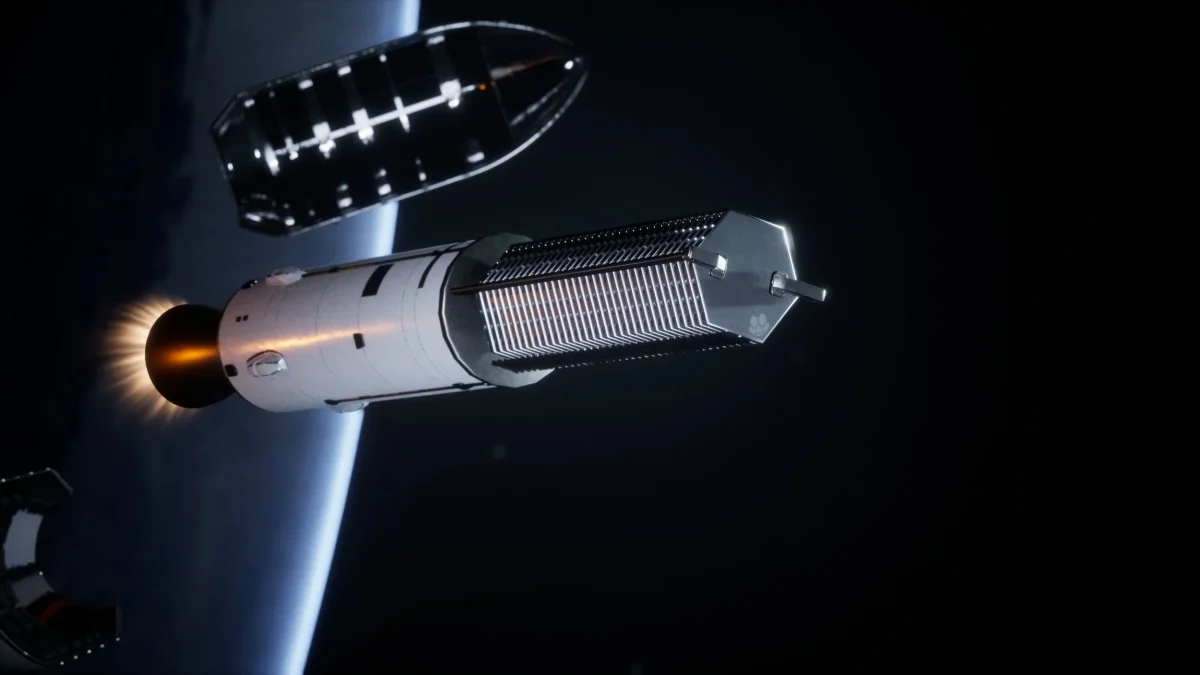
The primary challenge involves accelerating the probe, essentially a large Xenon gas tank with solar panels for solar-electric propulsion, to a sufficient speed. Traditional solar-electric propulsion becomes inefficient beyond Jupiter. Johnston collaborated with Alex Wissner-Gross, founder of Physical Superintelligence, an AI technology company. Their AI-powered feasibility assessment proposed a novel trajectory: the spacecraft will orbit the Sun for over a decade, performing "perihelion pump" maneuvers at close approaches (0.42 AU) to harness higher solar flux and the Oberth effect. This strategy will achieve an escape velocity of approximately 25 km/s (55,000 mph) after about 12 years, allowing the Fermi Explorer to reach Alpha Centauri in roughly 77,000 years on a ballistic coast. This demonstrates a pragmatic approach to a monumental task.