Global — Ekhbary News Agency
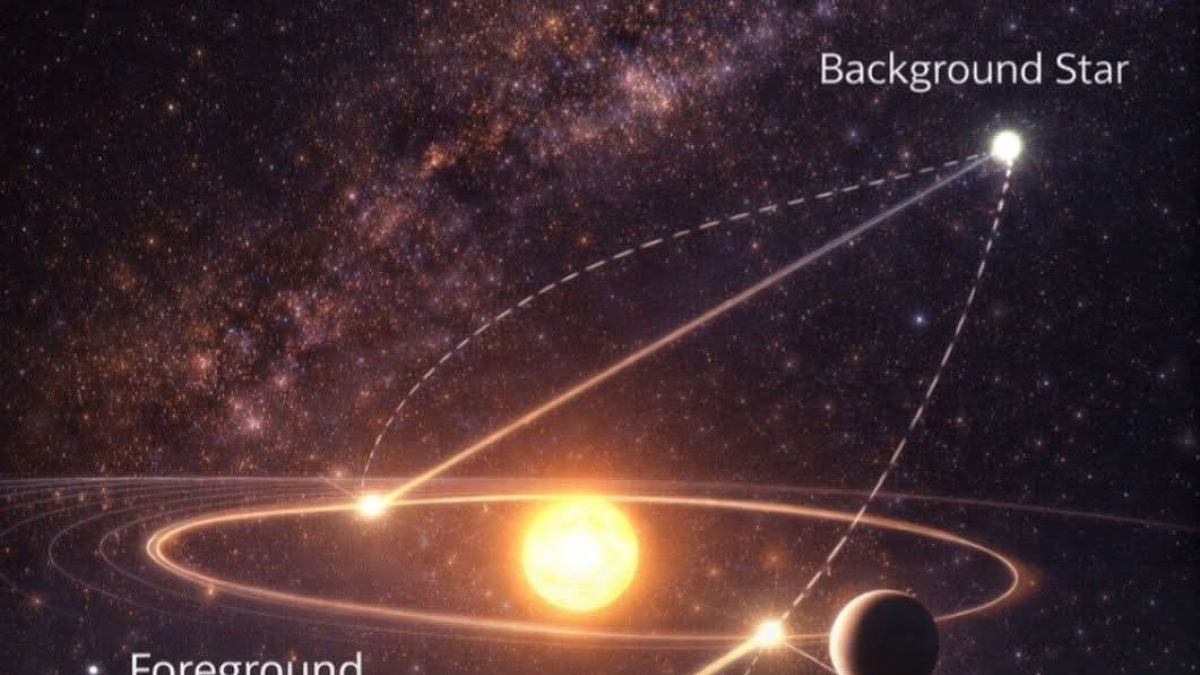
New astronomical insights suggest that distant, Neptune-sized worlds, often termed 'rogue planets' for their seemingly unbound journeys across the galaxy, might not be as solitary as once presumed. These celestial bodies, while appearing detached, could in fact maintain subtle yet significant gravitational connections to their parent stars. This redefines our understanding of planetary systems beyond our own, as it happens.
Rethinking Planetary Isolation
For years, scientists have theorized about planets ejected from their nascent systems, left to wander interstellar space. However, recent observations and models propose a more nuanced reality. Such worlds may simply orbit at extreme distances, far beyond the conventional boundaries of their stellar neighborhoods, rather than being entirely adrift. This challenges the binary classification of planets as either bound or completely free-floating.
Read Also
- US Bakes Under 'Heat Dome' as Record Temperatures Fuel Wildfires
- England's New Buildings Risk Overheating Crisis, Experts Warn
- Birds' Ingenious Survival Strategies Amidst Record Heatwaves
- Summer Journey Across Southern England Reveals Landscape Changes Amidst Heatwave
- Bee Supplements Offer Cold Stress Resilience Amid Climate Crisis Study
Implications for Exoplanet Research
The possibility of these ultra-distant orbits expands the potential habitability zones around stars and offers new avenues for exoplanet detection. Understanding these subtle gravitational dynamics is crucial for comprehensive planetary formation theories. Researchers continue to refine detection methods to confirm these far-flung planetary relationships, pushing the frontiers of astrophysics.